Customers no longer email you; they ask “is it available?” on WhatsApp and “can I get a price?” on Instagram. When those messages are scattered across phones and accounts, nobody knows who replied or which customer is waiting. Kommo is a CRM built to collect exactly that mess.
What is Kommo?
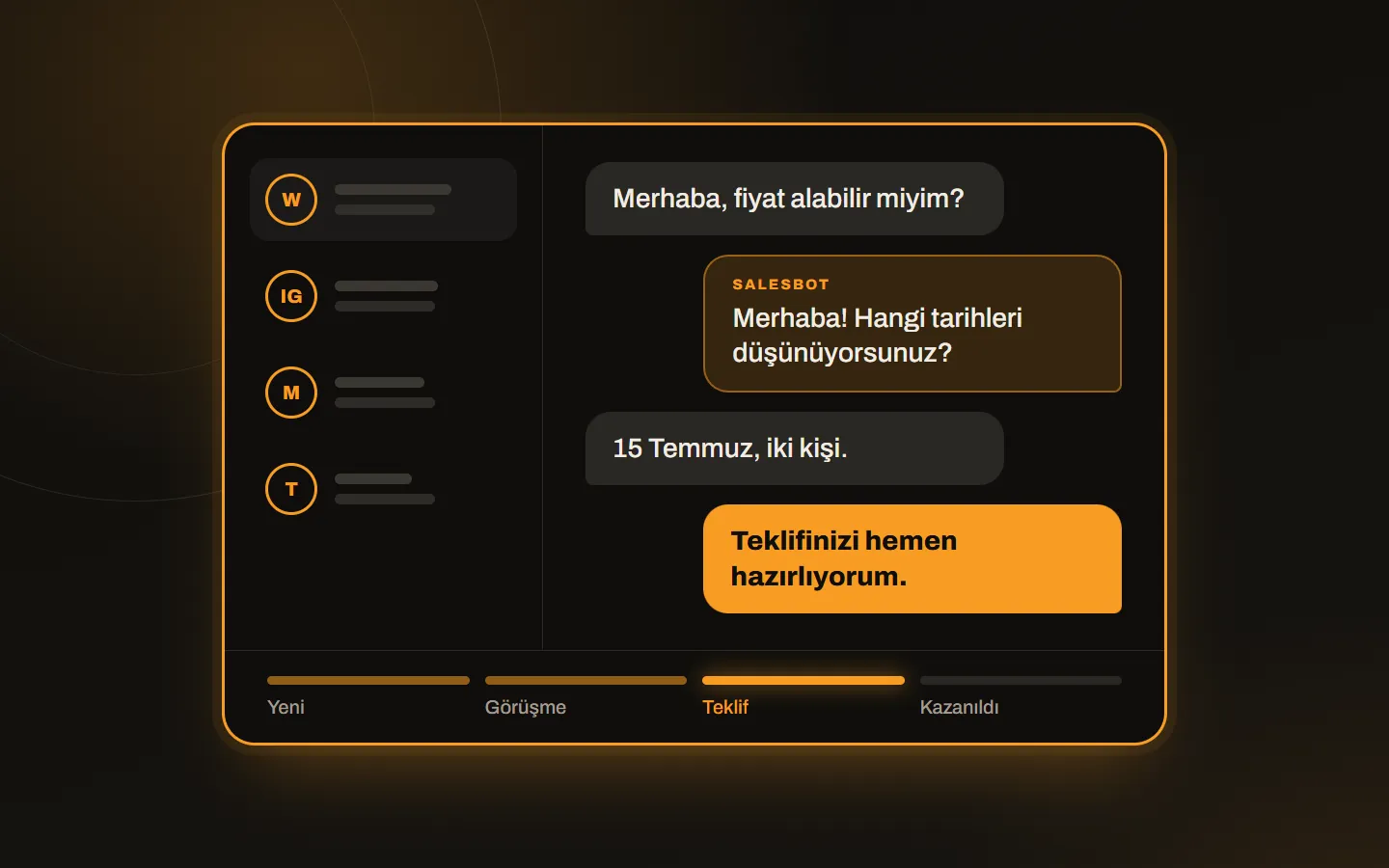
Kommo is a CRM platform that puts messaging at the centre of the sales process. Conversations from channels such as WhatsApp, Instagram Direct, Facebook Messenger and Telegram arrive in one inbox. Every conversation is tied to a customer card and a sales deal; notes, tasks and history live in the same place.
In short, you reply where the customer wrote and the record keeps itself. No typing data into a spreadsheet, no scrolling through a phone to remember what you discussed.
How it differs from a classic CRM
Classic CRMs are built around email, phone and forms. When a customer writes on another channel, the record is usually entered by hand, or not at all. In a message-based CRM the flow is reversed: the conversation comes first and the record grows out of it.
| Classic CRM | Message-based CRM (Kommo) | |
|---|---|---|
| Starting point | Form, email, phone | WhatsApp, Instagram, Messenger |
| Record | Mostly manual | Automatic, from the conversation |
| First reply | Working hours, depends on a person | Instant by bot, then a salesperson |
| Follow-up | Depends on reminders | Tasks and timers visible in the pipeline |
What you can do with Kommo
- Unified inbox: all channels in one list. The team replies from the same screen and you can see who has a conversation.
- Sales pipeline: deals move by drag and drop through stages such as “new message, in conversation, offer sent, won”.
- Salesbot: build bots without code. The bot greets, asks the first question and routes the customer by the answer. We walked through it in connecting WhatsApp sales to a CRM.
- Tasks and reminders: follow-ups are not forgotten; tasks open by hand or automatically through a bot.
- AI assistance: reply suggestions, conversation summaries and writing help; on higher plans, AI agents that answer questions themselves.
- Integrations: web forms, e-commerce, payment systems, Zapier, Make and an open API connect it to your existing tools.
Who is it for?
Any business whose customers make first contact by message: villa and hotel bookings, real estate, beauty and health, education, e-commerce, service and corporate sales. The common thread: the first question arrives on WhatsApp or Instagram and the speed of your answer decides the sale.
If two of these are true for you, Kommo will probably help:
- Several people watch the messages and it is unclear who replied.
- Customer follow-up lives in a phone book, a notebook or Excel.
- Messages that arrive outside working hours wait until the next day.
- You cannot tell what happened to leads from ads or your website.
If your need is simpler, for example only taking appointments, a purpose-built tool like 1randevu may be less complex. We collected what to look for when choosing in eight questions to ask when choosing a CRM.
Setup and price
Kommo is priced per user; as the plan goes up, automation, AI and channel limits grow. At Kariha we provide the licence with a local invoice and set up the account, channel connections, sales pipeline and bots around your business. If you like, you can leave management to us with the technical support add-on. Plans and current prices are on our Kommo CRM service page.
If you would like to talk about how your website forms and ads would connect to Kommo, write to us. You can see examples of our work on the references page.