Guests usually see your room on a booking platform first, then often check the hotel’s own website. If they cannot find what they need there, they go back to the platform and you pay the commission. A hotel site’s job is less about looking good than turning that second look into a booking.
These eight points are the list we start every tourism project with.
1. Booking belongs on the first screen
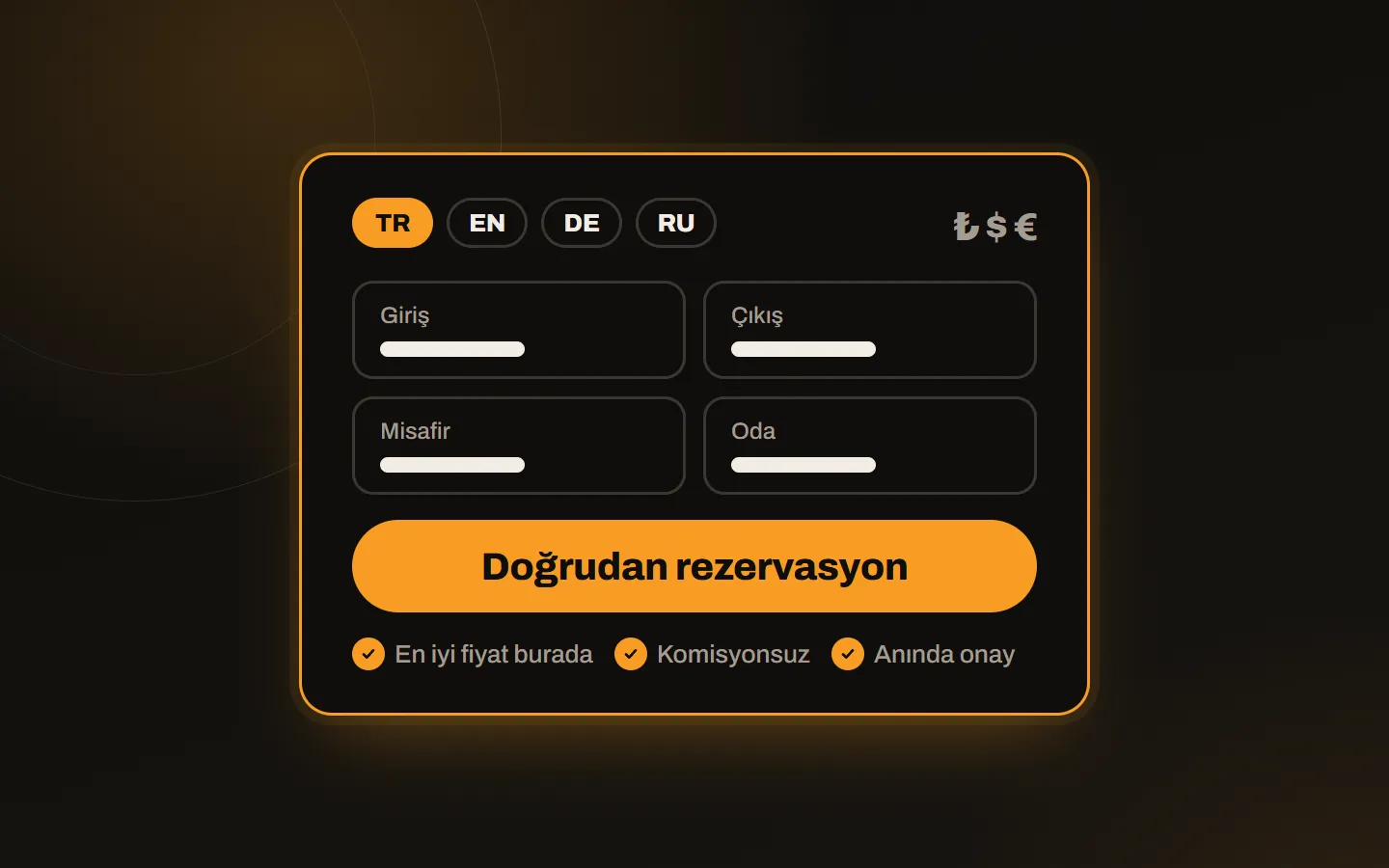
Check-in and check-out dates, number of guests and one clear button. Visitors should not have to search for it; a booking bar that stays fixed while scrolling helps. A “Reservation” link in the menu is not a substitute for the form.
2. Every room type gets its own page
A single “Our rooms” list satisfies neither guests nor search engines. Give each room type its own address with floor area, bed layout, view, amenities and photos. Someone searching for “sea view family room” can land straight on that page. Over the years these pages become some of the most visited parts of the site.
3. Photos must load fast and at the right size
Photography sells a hotel, but a 6 MB cover image keeps a mobile visitor waiting. Images should be converted to the right size and modern formats (WebP, AVIF) on upload. For the details, see five things slowing your website down.
4. Plan languages and currencies from the start
Foreign guests should pick language and currency at first glance. Language support is more than a flag in the menu: each language needs its own address (/en, /de), a translated page title and description, and hreflang tags that tell search engines which pages match. If a translation is missing, it is better to hide that page than to show it half-finished.
5. Booking on mobile in three taps or fewer
Hotel research mostly happens on phones. The calendar must be easy to use with a finger, the form must open the right keyboard (phone, email) and the payment or request step should fit one screen. Try the whole flow on your own phone over mobile data; where you get stuck, guests do too.
6. Make trust signals visible
- Business details, a clear address and the location on a map
- A reachable phone number and WhatsApp
- Real guest reviews, not invented or inflated ones
- Cancellation and prepayment terms stated plainly
These belong next to the booking step, not at the bottom of the About page.
7. Describe the hotel to search engines
When the hotel’s name, address, phone, rating and amenities are marked up as structured data (schema.org Hotel), search engines can show them more accurately. Your Google Business Profile should be filled in and consistent with the site; see local SEO and Google Business Profile.
8. Make the booking engine part of your site
A visitor sent to an external booking engine lands on a different design and a different domain, which breaks the journey. Where possible the booking step should run in your site’s design and on your own domain, with live prices and availability. If you need custom software for rooms, rates and reservations, that is exactly what our custom software service is for.
Quick checklist
- Is there date selection and a booking button on the first screen?
- Does each room type have its own page and photos?
- Does the first load on a phone take more than a few seconds?
- Does each language have its own address and translated title?
- Is trust information close to the booking step?
We collected what we do for hotels and tourism on our tourism and hotel industry page, and you can see an example in Infinity City Hotel. If you are interested in a related field, seven common mistakes when building a villa rental site is also worth reading.
If you want to build your hotel’s site from scratch or improve the existing one for direct bookings, write to us and we will look at what actually works first.