
If visits rise while suitable enquiries remain flat, appearance may be only part of the problem. You could be attracting the wrong audience, leaving important questions unanswered or losing people during contact. Follow the journey from arrival to an enquiry reaching your team before choosing a fix.
Define what counts as a useful enquiry
A button click is not the same as a customer conversation. Someone can open WhatsApp without sending a message. A completed form might be a job application or an unrelated support request. Counting all those actions as sales leads hides the issue.
Write a simple definition, such as “A reachable person describing a project within our service scope.” Track suitable enquiries across forms, calls and messages using that definition. A basic record of date, service, known source and suitability is a useful start.
Separate website activity from sales outcomes. The site can bring an appropriate enquiry, but follow-up, availability and commercial fit still influence whether it becomes work.
Check whether visitors expect what you offer
A popular information article may attract people who are learning rather than buying. That is not necessarily poor traffic, but it should not be evaluated as if every reader needs a proposal today.
Compare search queries and advertisement promises with the destination page. Someone looking for maintenance should not have to infer whether a page about new projects includes support. The promise that brought them in should have a clear counterpart in the page content.
Also distinguish people searching your brand from those discovering you through a problem. Familiar visitors may need immediate contact details; new visitors need service scope, working methods and evidence of relevant experience.
Answer the questions behind a buying decision
Words such as “professional” and “innovative” do not explain what a customer receives. State who the service is for, what work is included, what the customer must provide and how the process continues.
Review whether the page contains:
- Specific deliverables, such as a management panel or integration.
- Responsibilities for text, images and account access.
- Relevant project examples and your contribution to each.
- Factors that affect the scope and budget.
- A clear explanation of what happens after an enquiry.
You do not need a fixed public price for every project. Explaining the factors behind a quote can still reduce uncertainty and help visitors decide whether a conversation is worthwhile.
Make trust verifiable
Real projects, consistent contact information and clear responsibilities provide useful evidence. Explain whether you designed, developed or maintained a reference project. A wall of logos without context may be harder for a visitor to relate to their own needs.
Avoid invented reviews and unsupported success rates. People need to understand who will handle their project and what support they can expect. Clear working arrangements can communicate that better than exaggerated claims.
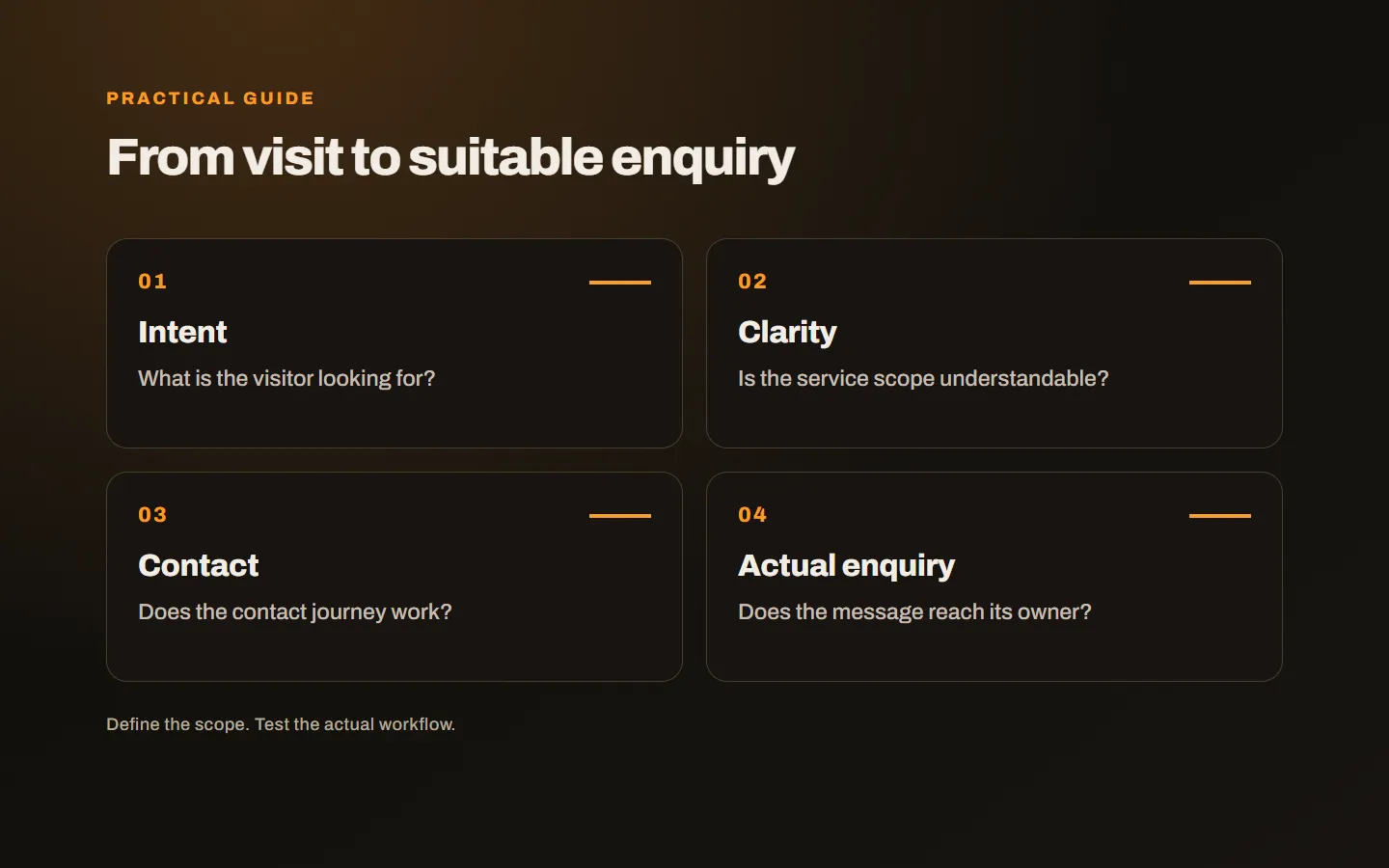
Try the contact journey on a phone
Submit the form yourself. Check whether the keyboard covers fields, errors identify the problem and previous answers remain available. Test the telephone link and confirm notifications reach the right inbox.
Do not require information that is unnecessary for a first discussion. Keep the fields your team genuinely needs and explain what users should provide. Make ownership of incoming messages clear: a shared inbox without a responsible person can still lose enquiries.
Prioritise working tasks and readability
Heavy images, intrusive overlays and delayed controls can prevent people from completing their task. However, a technical score alone does not explain every sales problem. A broken form is more urgent than a minor image optimisation.
Our website performance checklist can help investigate technical issues. Review real service pages on a phone, including text, examples and action buttons.
Ask the sales team which details prospects repeatedly request. A recurring question may reveal information that is missing, ambiguous or difficult to find on the page. Use those conversations as evidence for content changes. For example, repeated questions about who supplies product photographs suggest that responsibility should be explained before the enquiry form. Keep the review tied to actual customer language and the service you provide. This can be more useful than adding another generic section because competing websites happen to have one, and gives the next change a specific purpose.
Test one clear hypothesis at a time
If you change the audience, advertisements, headline and form together, understanding the result becomes difficult. Record a hypothesis, such as visitors not finding the service scope, and change the relevant section. Then review suitable enquiries over a meaningful period. Small traffic volumes make short-term percentages unreliable.
See our web design service and tell us which visitors you receive and which enquiries you want. Reviewing the current journey is the first step in deciding what needs improvement.