
Not every real estate office’s home page has to look the same. As the portfolio type, team structure and the channel buyers arrive from change, so does the first piece of information a visitor looks for. The five structures below are not templates to copy; they are starting points showing which page should come first in which situation.
1. Solo agent: trust and a selected portfolio
For an independent agent, visitors first want to understand who the person is, which area they specialize in and which listings they work with.
- Home page: area of expertise + selected listings
- Agent profile: experience, contact, active listings
- Listing details: clear information, gallery and direct WhatsApp
- About / contact: office, way of working and directions
In this structure a real profile and fast contact matter more than a complex menu.
2. Boutique office: search and team
In a boutique office with several agents, visitors want to find the listing they are after and reach the person responsible. The home page combines search, featured portfolio and agents. Each agent should have their own listings page.
3. Area-specialist office: content and local visibility
For an office working in specific districts or neighborhoods, area pages are a strong tool. But these pages should be guides that answer buyer questions, not empty keyword text. Active listings and agent expertise link to these guides naturally.
For local content structure, read our guide to winning customers from Google.
4. Project and construction sales: more than a listing list
For a company selling projects, each unit is presented not as a standalone listing but as part of the project’s whole story. It starts with a main project page with location, gallery, master plan, unit types and sales office information. Unit-type pages link to this main page.
In this structure visitors do not want to leave a phone number before seeing enough context about the project. So visual and technical decision information should come before the short form.
5. Selling to foreign buyers: language alone is not enough
A multilingual structure should be more than a translated menu. Listing titles, descriptions, currency comparison and the way to reach an agent should also be understandable in the chosen language. For a foreign buyer, trust is built with clear contact information, a current portfolio and regular updates.
The common skeleton
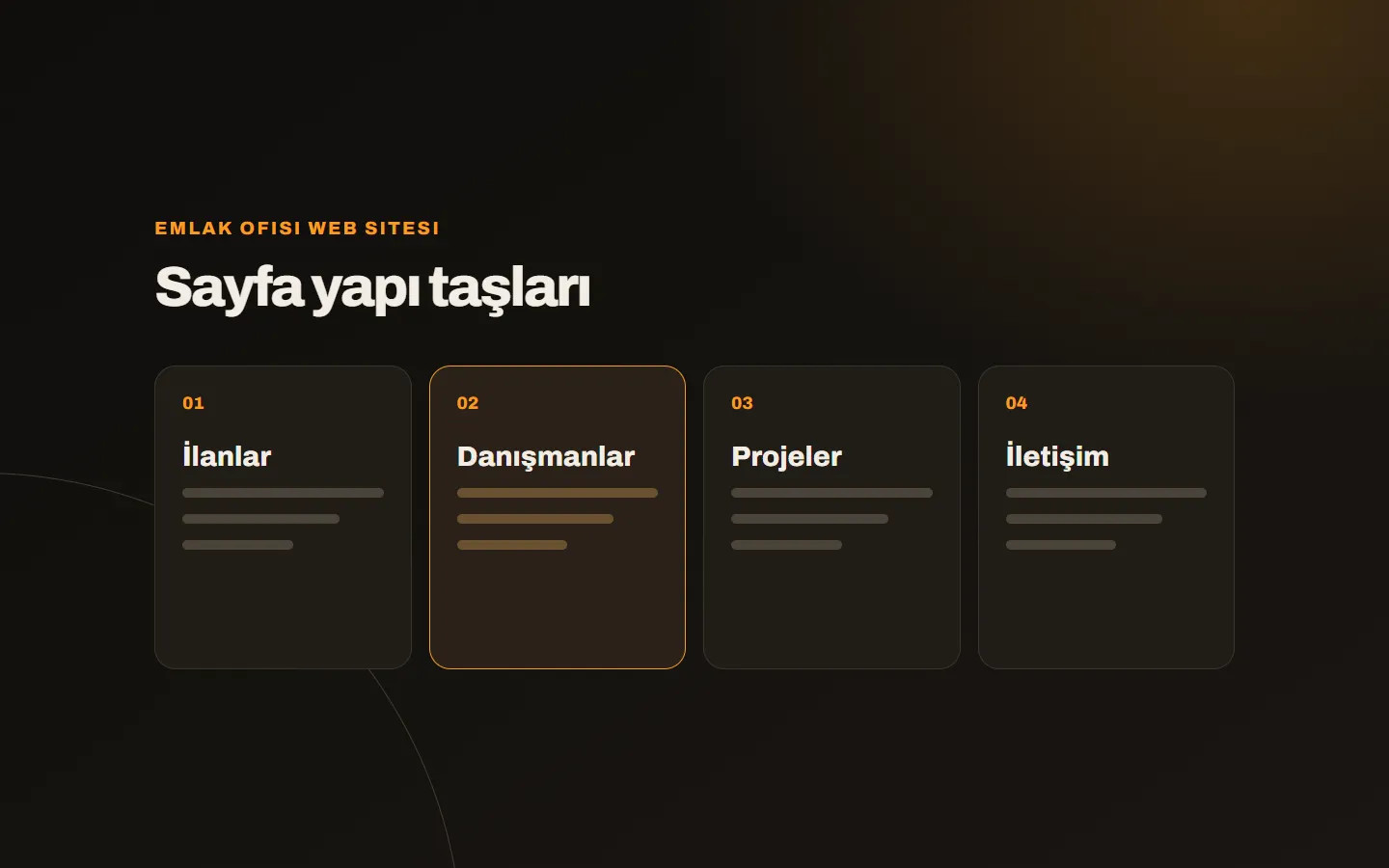
Whatever the scenario, a solid real estate site has these pages:
- A listing list that is easy to filter
- A detailed listing page
- Agent or team profiles
- Office and contact information
- Current content or area guides
Kariha’s real estate software brings this common skeleton together with listing, agent, page, blog and multilingual management. Take a look at live examples and scope. To decide on the structure that suits your type of office, get in touch.